Playing Solo Chapter 8: The Psychology of Consistency
Improving without repeating the same mistakes in Arena Breakout: Infinite (ABI). Learn how to review your own gameplay, recognize patterns, manage gear fear, and build better habits.
Solo play is not about one perfect raid. It is about making good decisions often enough that survival becomes repeatable.
A single squad wipe feels good, but consistency is what keeps your stash alive. The goal is not to become fearless. The goal is to become stable, disciplined, and honest about your own mistakes.
Reviewing Your Own Gameplay
Learning from death is important, but memory is unreliable. After a fight, it is easy to remember only the final moment: the peek that killed you, the grenade that landed near you, or the player you did not see.
If possible, record your gameplay. Even the last few minutes before death can be enough. A short clip lets you review the fight without pressure, emotion, or panic. You can pause, rewind, and look for the moment where the situation actually started going wrong.
This is also useful after successful but messy fights. Surviving does not automatically mean every decision was correct. You may have won because the enemy missed, because your armor saved you, or because the other player made a worse mistake.
When reviewing a clip, do not only ask why you died. Ask when the raid started turning against you.
- Did you ignore a sound cue?
- Did you stay in one position too long?
- Did you peek without utility?
- Did you choose the wrong angle?
- Did you engage too early?
- Did you loot before the area was controlled?
- Did you miss the chance to disengage?
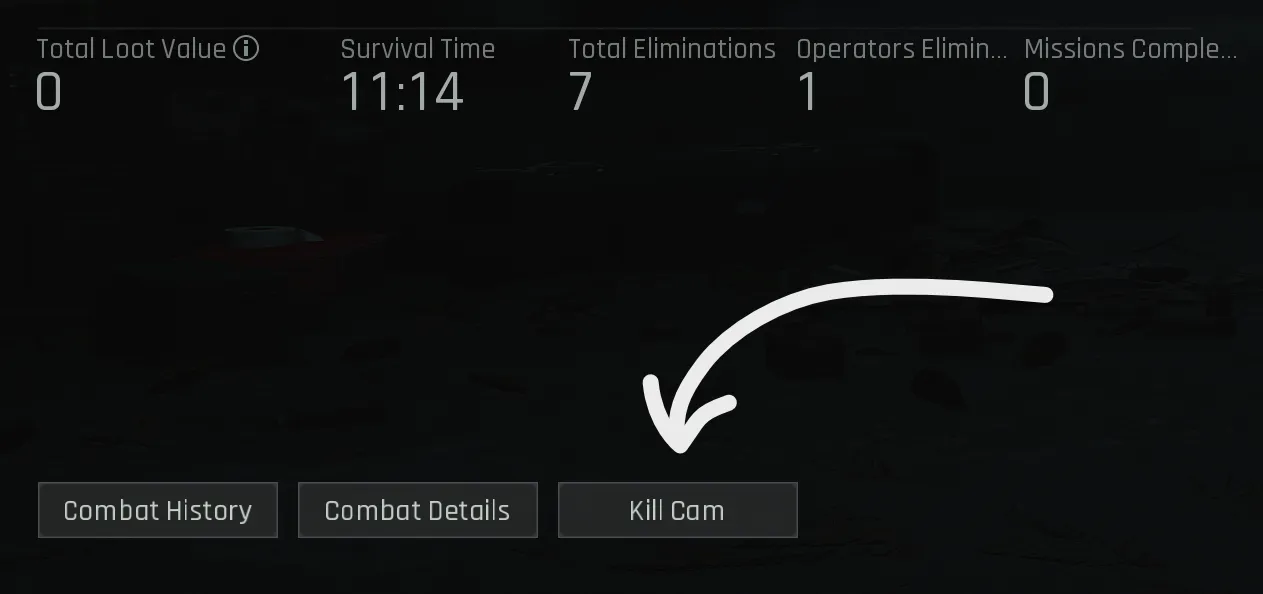
Example of using the Killcam to analyze positioning and sightlines from the enemy's perspective.
After that, compare your review to the killcam. Ask whether a different decision could realistically have changed the outcome. Would throwing a grenade before peeking have helped? Would rotating earlier have avoided the angle? Would waiting longer have revealed another teammate? Would refusing the fight have been the better decision?
The goal is not to find an excuse. The goal is to find the first correctable mistake.
A death is useful when it gives you a change to make in the next raid.
Recognizing Patterns
One mistake can look different across different raids, maps, and weapons.
You may die on TV Station because you re-peeked the same angle for the third time and got pre-fired by an H416. Later, you may die on Northridge because you re-peeked the same ridge line and the sniper finally landed the shot on the third attempt.
Different map. Different range. Different weapon. Same mistake.
This is why pattern recognition matters. If you only look at the surface of the death, it feels like two separate problems. One was close range, one was long range. One was indoors, one was outdoors. But underneath both deaths is the same habit: repeating a known angle after the enemy already had time to adjust.
The same applies to other mistakes.
- Looting too early can kill you on any map.
- Staying too long after a fight can kill you at any range.
- Ignoring damaged armor can ruin any raid.
- Sprinting through POIs can expose you whether you are on Farm, TV Station, Armory, or Northridge.
If the same mistake keeps appearing in different forms, it is no longer bad luck. It is a pattern.
Once you identify the pattern, you can start correcting it.
Gear Fear and Commitment
Gear fear is one of the easiest ways to ruin a good loadout.
The moment you enter the raid, the money is already spent. The weapon, armor, ammunition, attachments, and utility are no longer abstract prices in the menu. They are tools you brought to solve problems.
- “This gun costs half a million. I really do not want to lose it.”
- “These bullets are 7,000 each. I need to count every shot.”
- “This armor was expensive. I cannot afford to get into a bad fight.”
Those thoughts are understandable, but they make the loadout harder to use. Instead of helping you, the gear becomes pressure. You hesitate, avoid using your ammunition, refuse to take reasonable fights, and play worse because you are thinking about the price instead of the situation.
A better mindset is not to ignore the cost. A better mindset is to understand what the cost gives you.
- “This build cost half a million, so the attachments should help me control recoil.”
- “These bullets are expensive, but that is because they can actually damage the armor I expect to fight.”
- “This armor costs money, but it gives me more room to survive a mistake.”
That shift matters.
The gear is not a trophy. It is an extension of your solo toolkit. Your weapon helps you control distance. Your ammunition helps you threaten better armor. Your armor gives you more survivability. Your utility gives you options before exposing yourself.
This does not mean you should become reckless. Expensive gear is not an excuse to push every fight, waste every grenade, or stand in bad positions. You should still be cautious, disciplined, and selective.
But if you bring strong equipment, you need to let it do its job.
There is no point bringing Tier 5-6 ammunition if you are too afraid to shoot it.
There is no point bringing good armor if you play as if every bullet will instantly kill you.
There is no point bringing utility if you refuse to use it when it would make the fight safer and easier.
A solo player has no teammates. Your equipment is part of how you replace that missing support. Treat it as helpful and vital, not as something you are terrified to lose.
Once you commit to the kit, use the kit.
Building Better Habits Outside the Raid
Improvement does not only happen inside raids. The shooting range can be useful even when you are not trying to play seriously.
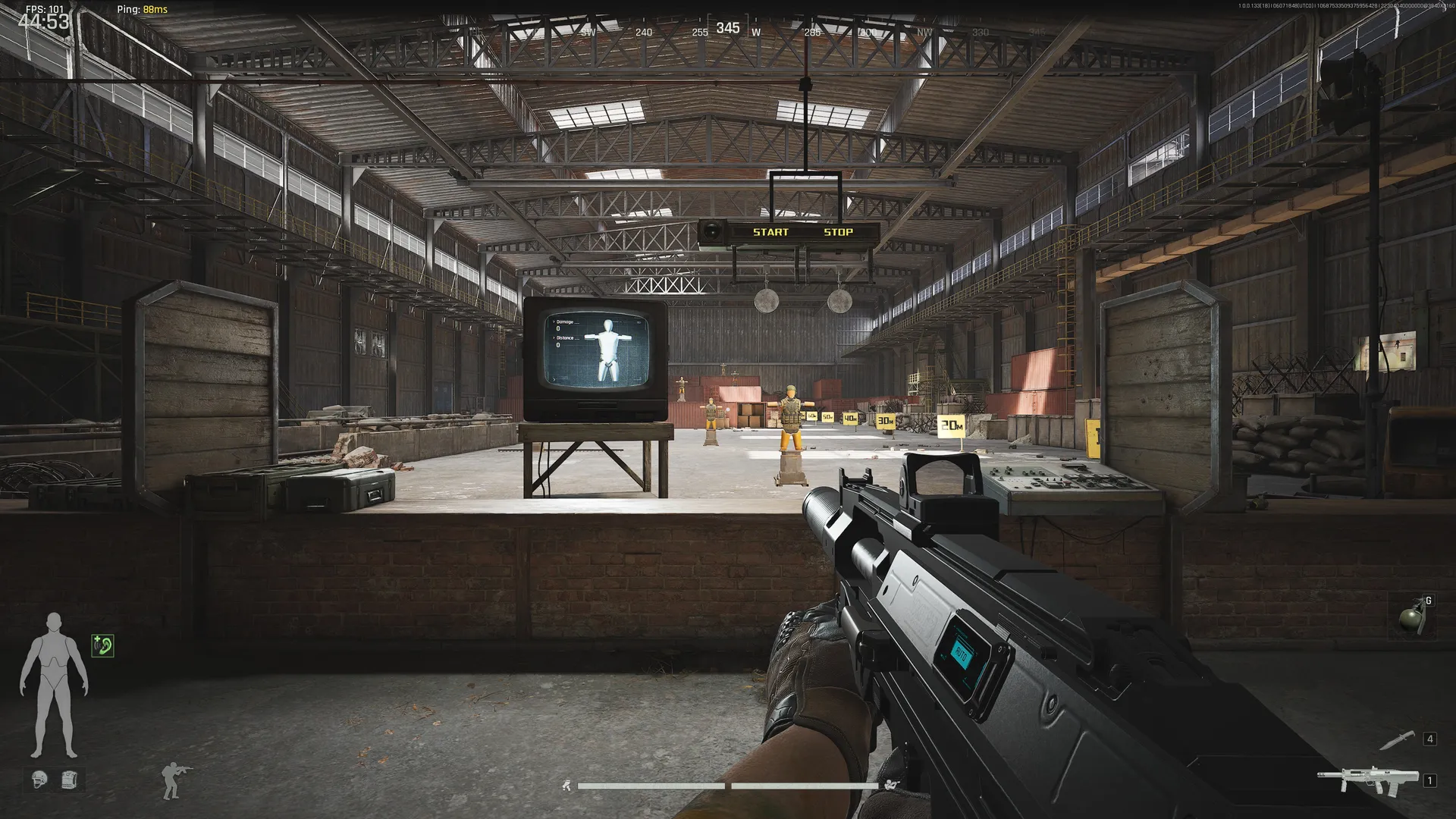
Use the shooting range to test different attachments, recoil behaviors, and ammo effectiveness without raid pressure.
Sometimes, use the range just to experiment. Try strange builds, unfamiliar attachments, different scopes, unusual ammunition, and weapons you would probably never bring into a real raid. This keeps practice more engaging while still teaching you how different setups feel.
It also gives you those small discoveries that are easy to remember later. You might end up talking to a friend afterward and saying something like, “.....like isn't it absurdly funny mag dumping a Tier 5 armour with three or four magazines of hollow point ammo as it just does not penetrate the armour….. ” That kind of testing is not wasted time. It teaches you, in a very memorable way, what certain ammo can and cannot do.
You can also use the range more seriously. Take weapons you already use and test their recoil, effective range, scopes, and handling. Practice with different builds you could potentialy bring into raids until the gun itself feels more familiar enough that you do not need to think about it during a fight.
This builds confidence before the raid starts.
You learn what your weapon can do, what it struggles with, and where its limits are. You learn how different ammunition interacts with armor. You learn why some setups feel comfortable and others do not.
Even a short range session can help. You do not always need to queue a raid to improve.
Building Better Habits Inside the Raid
Inside the raid, consistency comes from repeating small useful habits.
- Walk more than you sprint around points of interest. Walking makes less noise for enemies and lets you hear more of the raid around you.
- Check your armor after being hit. This is especially important for helmets and face shields. If a face shield is still above roughly half of its original durability, it may still save you from one more shot, but it should no longer be trusted for repeated hits. Anything below that becomes increasingly unreliable.
- Take small victories and leave. Killing one team, looting the area, and extracting is a successful raid. You do not need to turn every good raid into a perfect one.
- Check the map when you are safe. Remind yourself where you are, which points of interest are nearby, where your extracts are, and what route you are taking.
- When you hear gunfire, turn toward the sound and open the map. Your character icon shows the direction you are facing. Use that direction to check nearby points of interest and estimate where the fight may be happening. From there, reassess: do you want to investigate, avoid it, or stay on your current route?
These habits are simple, but that is why they work. They reduce autopilot.
Long-Term Improvement Recap
Long-term improvement comes from repeating the same simple process: review your raids, recognize patterns, correct one habit at a time, and keep playing with intention. If you keep dying after kills, focus on post-kill discipline. If you keep getting surprised, focus on movement and sound. If you keep losing fights after being seen, focus on repositioning. If you keep dying while looting, focus on leaving bodies alone until the area is controlled. Do not try to fix everything at once. Pick one weakness, work on it for several raids, and let small corrections build into better judgment.
Keep Reading the Guide
Planning the way out before you need it in Arena Breakout: Infinite (ABI). Learn regular vs conditional extracts, timed extracts risk, approach angles, and greed control.
Next ChapterChapter 9: Common Solo ScenariosApplying the rules of solo survival under pressure. Learn the best responses to squad kills, flanking squads, weight limits, and combat variables.