Playing Solo Chapter 6: Looting Under Pressure
Turning survival into profit without losing control in Arena Breakout: Infinite (ABI). Learn looting order, value-per-slot calculation, backpack management, weight penalties, and armor swaps.
Many successful raids end in failure because players become distracted by loot. The moment you begin looting, your awareness decreases and your vulnerability increases.
Loot is only valuable if it reaches extraction.
A solo player should not think about looting as a reward screen. Looting is still part of the raid. You are still vulnerable, still making noise, still spending time, and still giving other players a chance to catch you in a weak position.
The previous chapter covered how to use a kill as leverage during a fight. This chapter focuses on what happens when it is actually time to take value. The goal is not to loot everything. The goal is to take what improves your raid without losing control of it.
Loot Is Not Yours Yet
A kill does not mean the loot belongs to you. A locked room does not mean the contents are yours. A valuable item in your backpack does not mean profit.
Loot only becomes yours when you extract.
This is why looting should be treated with the same discipline as fighting. If you rush a body too early, you may die to the teammate watching it. If you search too long, another squad may arrive. If you become overweight, your ability to fight and escape becomes worse.
The more value you carry, the more your priorities should change.
- Is this item worth the time?
- Is this item worth the weight?
If the answer is no, leave it.
Looting Order: Survival, Capability, Value
When looting under pressure, the order matters.
The first priority is survival. If you need meds, ammo, painkillers, grenades, or a working armor piece, those matter more than random valuables. A cheap medical item that lets you extract is worth more than an expensive item you die carrying.
The second priority is capability. Capability means anything that expands what you can do in the raid. A better weapon, higher Tier ammunition, a stronger scope, a grenade, a fresh face shield, or a better armor piece can change the fights you are able to take or avoid.
The third priority is value. Once your survival and capability are handled, then you can think about money. Compact valuables, high-value attachments, rare items, and efficient barter items are usually better than bulky loot that fills space without justifying the weight.
This order keeps looting practical.
- Survive first.
- Improve your options second.
- Take profit third.
Looting Bodies Under Pressure
Bodies are dangerous because they create attention. A dead player may have teammates nearby. Other players may have heard the fight. Someone may be watching the body as bait. Even if the area seems quiet, looting still lowers your awareness and locks you into an animation.
Do not deep-loot a body unless you have enough control over the area.
If the situation is safe enough, you can quickly remove the dead player’s weapon and fall back. This denies the enemy an easy recovery and may also give you a useful tool. If you entered the raid with a close-range weapon and killed a player carrying a sniper rifle with high-tier ammunition, you may have expanded the range of fights you can take for the rest of the raid.
If the enemy is farther away, you may be able to check their pockets or rig for grenades, meds, or magazines. But this should be treated as a high-risk action. The longer you interact with the body, the more likely you are to be punished.
Armor swaps can also be worth considering if the dead player’s armor is a higher tier or has better durability than yours. Even then, take only what directly improves your survival and leave.
Do not confuse access with safety.
A body you can reach is not always a body you should loot.
Looting for Capability
Looting is not only about money. Sometimes the best item on a body is not the most expensive one. It is the item that changes what you can do next.
If you enter a raid with an MPX, your strength is close to medium range. If you kill a sniper carrying high-tier ammunition, that weapon may expand your effective range from close-medium to close-long. That changes your options. You can hold longer angles, threaten players you previously could not fight comfortably, and use flanks more effectively.
This is looting for capability.
A stolen rifle may let you fight armor your original ammunition struggled against. A grenade from a rig may let you clear a room without pushing blindly. A painkiller may let you survive a long extraction route. A fresh armor piece may let you survive one more fight.
Do not take every weapon just because it looks expensive.
Ask what the item gives you.
- Does it solve a weakness in your current kit?
- Does it help you survive the next fight?
- Does it help you leave the raid?
If it does, it may be worth taking even if it is not the most valuable item on the body.
Value-Per-Slot
Backpack space is limited, and weight matters. A solo player should learn to judge loot by value-per-slot, not by whether an item is technically worth something.
A large item that takes several slots may not be worth carrying if smaller items give you more value for less space and weight. Filling your backpack with mediocre loot can make you slower without meaningfully increasing profit. Empty space can feel wrong, but filling it with bad items is not always better.
This becomes more important after you already have valuable loot. Once your backpack contains items worth extracting, every new item should justify the added risk and weight.
On smaller maps, be careful about looting too early. Maps such as TV Station, Armory, and Farm punish slow starts because player contact can happen quickly and strong positions are often more valuable than early miscellaneous loot. On TV Station especially, taking position is usually worth more than filling your bag in the first few minutes.
Farm gives slightly more room to loot depending on your spawn, but even there, early looting is not always necessary. Every low-value item you pick up moves you closer to being overweight, takes space that could be used for better loot later, and may slow your ability to reposition if a fight begins.
Empty backpack space has value by itself. If you fill your bag early with low-value miscellaneous loot, you may not have room when a better opportunity appears. This matters especially after a kill, where you may need to quickly snatch a weapon, armor, helmet, large attachment, or high-value item before leaving the body. If your backpack is already packed with mediocre loot, you either waste time reorganizing under pressure or leave better value behind.
The game does not clearly explain how much weight affects you before you become fully over-encumbered. Even if you are still below the overweight threshold, extra weight slows your overall stamina regeneration speed. For a solo player, that matters. Your movement is one of your main defensive tools, and every unnecessary kilogram makes that tool weaker.
If you want to loot early, keep it selective. Prioritize containers with a higher chance of high-value items, such as baggage cases, clothing, document boxes, and drawers. Avoid filling your backpack with low-value miscellaneous items just because they are available. Early in the raid, space, mobility, and position are often worth more than random loot.
Keep looting simple, go by the rule 15000 Koen per slot or more.
Do not loot like the raid is already over.
Loot like you still have to carry everything through danger.
Backpack Management and Weight
After looting, your movement changes. A fight that was manageable before may become dangerous if you are now overweight. Your stamina, speed, ability to reposition, and ability to disengage are all affected.
If you are forced to fight while carrying a heavy backpack, consider dropping it before committing to the angle. This can give you back mobility and make the fight less awkward. If you survive, you can return to the bag. If you die, at least you fought with the best movement available.
This is especially important if you are about to swing, reposition, or escape. A heavy backpack can turn a good decision into a slow one.
There is also a visual element to backpack management. Some backpacks make your character’s silhouette wider or bulkier when peeking from cover, which can make you easier to spot or hit before the rest of your body is exposed. Large, rounded backpacks such as the 926 Field, RUSH Tac., AMP7 Assault, and Chapman Military are examples of bags that can create this problem.
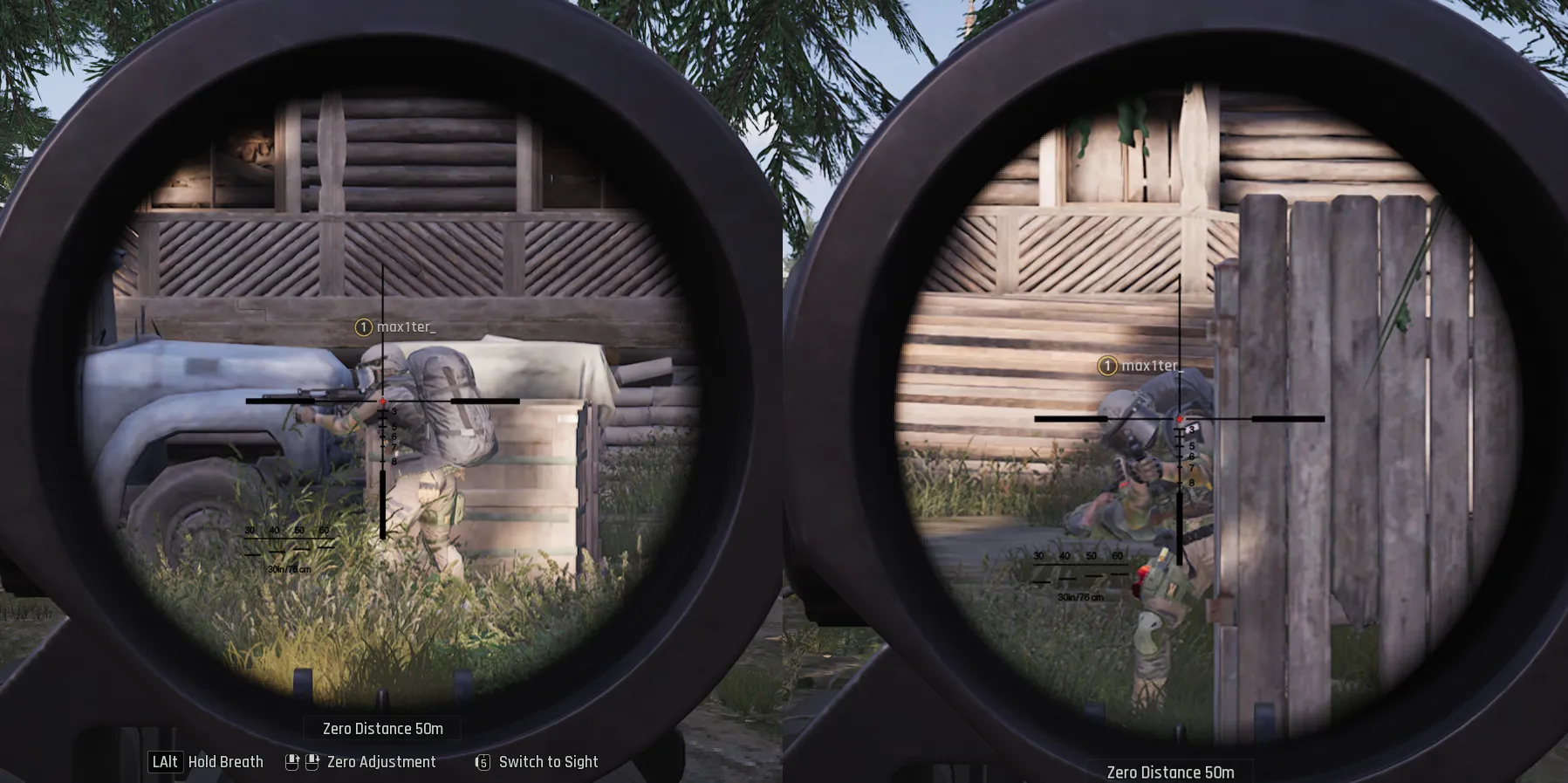
Bulky Backpack Silhouette. Large backpacks can make your silhouette wider, making you easier to spot when peeking cover.
Dropping a bulky backpack before a fight can reduce your visible profile and give you cleaner movement around cover. This is a small detail, but small details matter in solo play.
If you want to reduce this issue without dropping your backpack every time, consider slimmer options such as the Outdoor Travel, Large Camping, or Med Field backpacks. Their shape sits closer to the character model, making them less visually intrusive when peeking or holding tight angles.
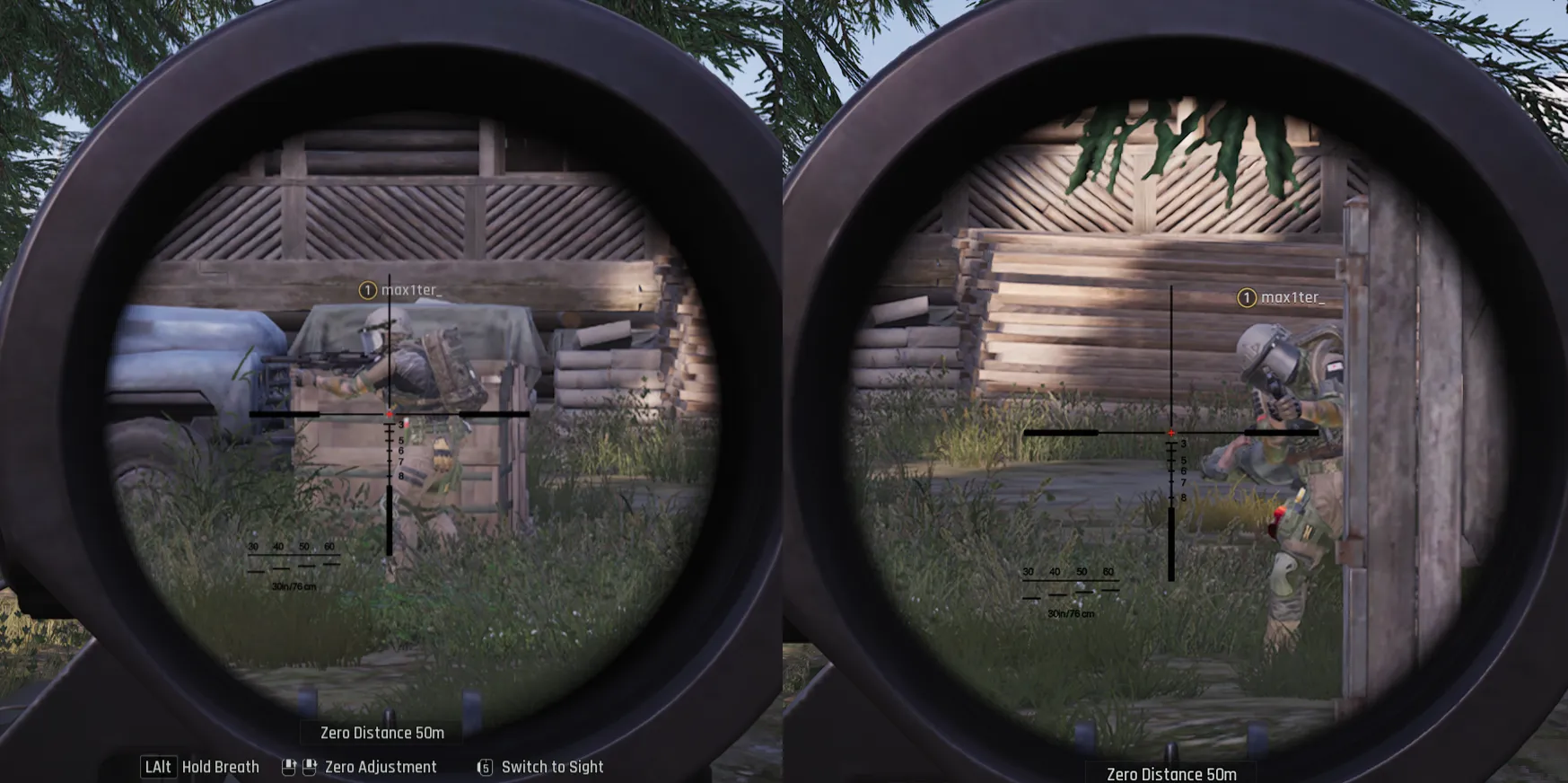
Slim Backpack Silhouette. Slimmer backpacks sit closer to the character model, reducing visual profile.
If your backpack is empty, another option is to roll it up and place it inside your rig, as long as the rig has enough space for it. Depending on the backpack, this may require a suitable 1x2 or 2x2 space. Doing this removes the backpack from your character model visually, which can make your silhouette cleaner while moving or peeking.
This can only be done after entering the raid. When preparing your loadout, the game requires the backpack to be equipped before deployment. Once you are in the raid, you are free to roll it up if you have the space and do not need the storage yet.
This is useful when you are not planning to loot immediately and want to prioritize fighting, positioning, or moving quietly through early contact. Later, if you find value worth carrying, you can equip the backpack again.
Do not overcomplicate this. You do not need to drop your bag before every fight. But if the backpack is heavy, bulky, or preventing you from moving properly, treat it as a liability until the fight is over.
Your loot is only valuable if you survive long enough to extract it.
Armor Swaps and Gear Replacement
Armor swapping is one of the few looting actions that can be worth doing quickly under pressure, because it directly affects your survival.
If the dead player has armor with a higher tier or significantly better durability than yours, switching can be worth the risk. The same applies to helmets and face shields if your current protection is damaged or unreliable.
But do not swap blindly.
A higher-tier item with poor durability may not be better than your current gear. A repaired item with a low maximum durability may look usable while still being much weaker than a fresh piece of equipment. Pay attention to the condition of the gear, not only the tier.
The purpose of an armor swap is not to look more geared.
The purpose is to survive the next shot.
If the swap does not clearly improve your survival, do not waste time on it.
When to Stop Looting
Knowing when to stop looting is one of the most important solo skills.
Many players do not die because they failed to find value. They die because they found value and refused to leave.
Once your backpack is worth extracting, your risk tolerance should change. You should stop treating the raid like an empty opportunity and start treating it like something you can lose. More loot is not always worth the extra route, the extra fight, or the extra minute spent in a dangerous area.
A good question to ask is:
"Would I be upset if I died with what I have right now?"
If the answer is yes, extraction should become part of your immediate plan.
This does not always mean leaving instantly. It means your priorities change. You avoid unnecessary fights. You stop checking low-value containers. You choose safer routes. You start thinking about the closest realistic extraction option.
The raid is already profitable.
Do not turn profit into greed.
Common Looting Mistakes
The first mistake is looting too early. A body may still be contested, and the enemy may be waiting for you to touch it.
The second mistake is looting too deeply. Spending too long inside a body, container, or backpack gives other players time to rotate toward you.
The third mistake is looting for price while ignoring survival. A valuable item does not help if you leave behind meds, ammunition, grenades, or better armor that would have kept you alive.
The fourth mistake is filling your bag with low-value weight. If loot makes you slower without giving enough profit, it may not be worth carrying.
The fifth mistake is refusing to leave after finding something valuable. A good raid does not need to become a perfect raid.
The final mistake is forgetting that staying in one area for too long gives enough time for others to wander into your area.
Keep Reading the Guide
Choosing the fight before the fight chooses you in Arena Breakout: Infinite (ABI). Learn proper observe/think/execute phases, flanker containment, utility timing, and disengagement rules.
Next ChapterChapter 7: Extraction StrategyPlanning the way out before you need it in Arena Breakout: Infinite (ABI). Learn regular vs conditional extracts, timed extracts risk, approach angles, and greed control.